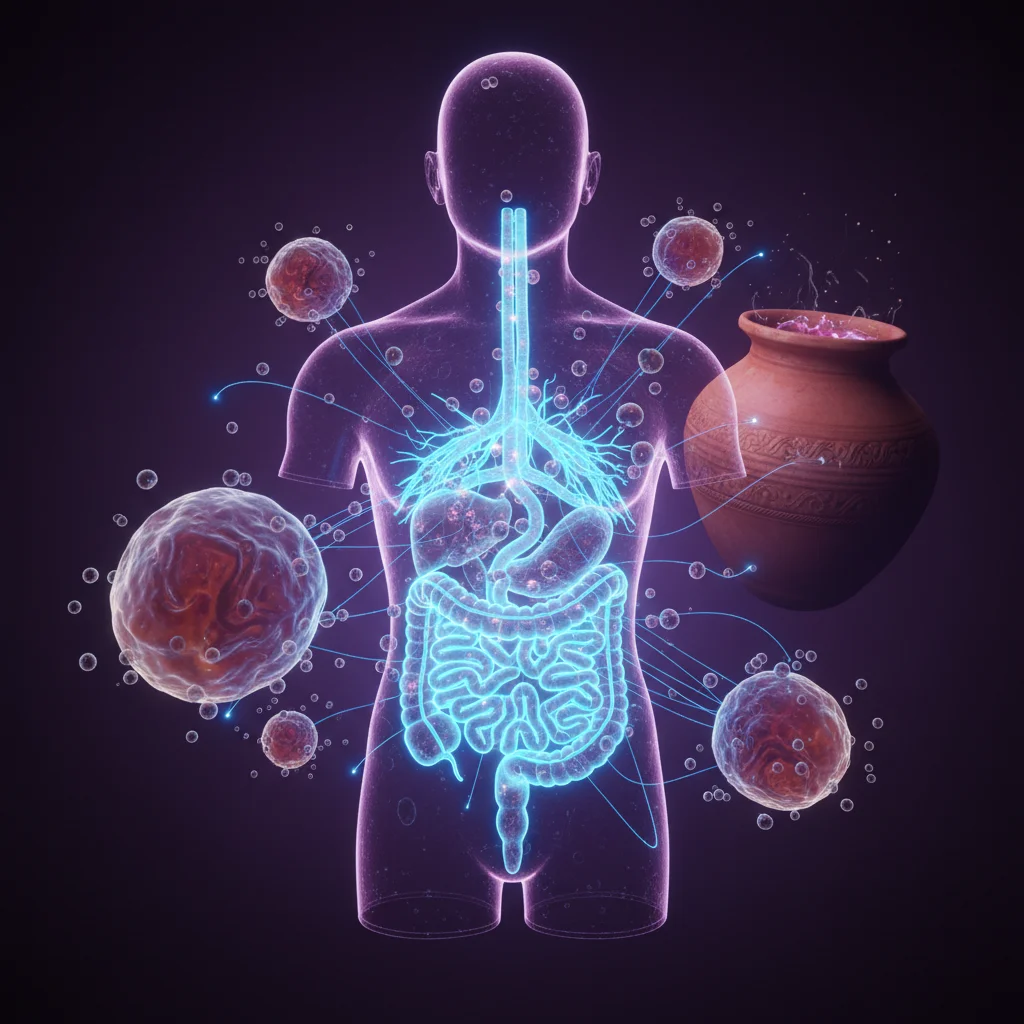
5 Signs Your Gut Is Crying for Help (And How Kombucha Helps)
TL;DR: Seven out of ten urban Indians deal with digestive issues every week, yet most ignore the warning signs until they snowball into chronic problems. This guide breaks down five unmistakable signals your gut is sending you, what the science says about why they happen, and how kombucha fits into the fix.
Your Gut Is Talking. Are You Listening?
There is a quiet crisis brewing in Indian kitchens, office cafeterias, and late-night Swiggy orders. The TumGard India Gut Health Report 2026, which surveyed over 20,000 Indians with digestive complaints, found that 67% of respondents had been dealing with gut problems for more than a year. Over a third had been suffering for more than three years. Most of them were still struggling despite regular medication.
A joint survey by Country Delight and the Indian Dietetic Association put the number in starker terms: seven out of every ten people in urban India experience digestive or gut health problems, with 60% reporting issues every single week and 12% dealing with them daily.
The problem is not that people don't feel it. They do. The problem is that most of us have normalised these symptoms. Bloating after lunch? That is just Indian food. Acidity at night? Pop a Gelusil, sleep it off. Fatigue every afternoon? Must be the weather.
But your gut is not just a food processing plant. It houses roughly 70% of your immune system, produces about 90% of your body's serotonin, and communicates directly with your brain through what researchers call the gut-brain axis. When things go wrong down there, the effects ripple through your entire body in ways you might never connect back to digestion.
Here are five signs that your gut is asking for help, and how a simple fermented drink might be part of the answer.
Sign 1: The Bloating That Never Fully Goes Away
You know the feeling. Lunch was two hours ago, but your stomach still feels like it is carrying a balloon. Your waistband feels tighter. You might even look visibly swollen around the abdomen by evening.
Occasional bloating after a heavy meal is normal. Persistent bloating, the kind that shows up multiple days a week regardless of what you eat, is not.
What Is Actually Happening
Chronic bloating typically signals one of two things: either your gut bacteria are fermenting food in a way that produces excess gas, or your digestive motility has slowed down, trapping gas in the intestinal tract. The TumGard report found that 34.7% of people with gut issues list bloating and gas as their primary complaint, making it the second most common digestive symptom in India after acidity.
The root cause often traces back to dysbiosis, an imbalance in the types and ratios of bacteria in your gut. When harmful bacteria outnumber beneficial ones, they produce more hydrogen and methane gas during digestion, leading to that persistent puffiness.
Where Kombucha Comes In
Kombucha contains acetic acid, one of the organic acids produced during fermentation, which helps suppress the growth of harmful bacteria in the gut. A 2026 doctor's guide from Federa Health explains that kombucha's acetic acid content can help rebalance the bacterial environment, reducing the gas-producing microbes that cause bloating.
A 2025 randomised controlled trial on fiber-enriched kombucha found that regular consumption led to a significant decrease in Ruminococcus torques, a bacterial strain linked to gas production and inflammatory bowel conditions. As these problematic bacteria decline, bloating tends to ease.
The practical advice: start with 4 to 8 ounces of raw, unpasteurised kombucha with lunch. Drinking it with food helps the acetic acid work alongside your natural digestive enzymes rather than hitting an empty stomach.
Sign 2: Irregular Bathroom Habits
Let us talk about what nobody wants to discuss at dinner. If your bowel movements are inconsistent (alternating between constipation and loose stools, or if you regularly go three or more days without a movement), your gut microbiome is almost certainly out of balance.
The Scale of the Problem
The Abbott Gut Health Survey found that 14% of urban Indians suffer from chronic constipation, higher than the 10% global average. In cities like Kolkata (28%) and Chennai (26%), the numbers are even worse. Among chronic sufferers, 65% could not pass stools for three or more consecutive days.
But here is the truly staggering number: the average person waits 80 days after symptom onset before seeing a doctor. Most try home remedies first, and about two-thirds show what researchers called "apathy" despite recognising the impact on their quality of life.
The TumGard data reinforces this: 83% of respondents had abnormal stool formation. That is not a niche problem. That is a majority of symptomatic Indians.
What Science Says About Kombucha and Bowel Regularity
A 2025 systematic review published in MDPI, which analysed eight clinical trials on kombucha, found that consumption was associated with improvements in gastrointestinal symptoms, "particularly in enhancing stool consistency and reducing the sensation of incomplete bowel evacuation."
The mechanism appears to work through short-chain fatty acids (SCFAs). A controlled clinical study published in Nature Scientific Reports found that kombucha consumption enriched several SCFA-producing bacterial taxa in the gut. SCFAs, particularly butyrate, nourish the cells lining your colon and help regulate the muscle contractions that move food through your digestive tract.
Think of SCFAs as fuel for your intestinal walls. When there is enough of it, the system runs smoothly. When there is not, things slow down or become erratic.
Sign 3: You Are Tired All the Time (But You Slept Fine)
You got seven or eight hours of sleep. You had your morning coffee. And yet, by 2 PM, you feel like you could collapse at your desk. This bone-deep fatigue that does not respond to rest is one of the most underrecognised signs of poor gut health.
The Gut-Energy Connection
Your gut does not just digest food. It determines how efficiently your body extracts nutrients from that food. When your microbiome is compromised, you can eat a perfectly balanced meal and still not absorb the iron, B12, magnesium, and other micronutrients your body needs to produce energy.
The Country Delight survey found that 59% of people who experience digestive issues every week also reported mental health challenges including lack of energy, poor memory, anxiety, and mood swings. That is not a coincidence. The gut and brain are in constant communication through the vagus nerve, and an inflamed or imbalanced gut sends distress signals that manifest as fatigue and brain fog.
There is also the serotonin angle. About 90% of your body's serotonin is produced in the gut, not the brain. Serotonin regulates not just mood but also sleep quality, appetite, and energy levels. When gut bacteria are out of balance, serotonin production drops, and you feel it as persistent tiredness and low motivation.
How Kombucha Supports Energy Levels
Kombucha works on this problem from two directions. First, the probiotics and postbiotics in unpasteurised kombucha help restore microbial balance, which in turn improves nutrient absorption. Dr. Julian Thorne notes that the polyphenols in kombucha, plant-based antioxidants from the tea base, reduce intestinal inflammation, which can improve the gut lining's ability to absorb vitamins and minerals.
Second, kombucha contains B vitamins produced during fermentation. These are directly involved in cellular energy production. While the amounts are modest, they contribute to the overall improvement many regular kombucha drinkers report in their energy levels.
The key word here is "regular." One bottle is not going to fix chronic fatigue. But consistent daily consumption over several weeks can help shift your microbiome toward a state that supports better energy metabolism.
Sign 4: Your Skin Is Breaking Out (And Skincare Is Not Fixing It)
You have tried the 10-step Korean routine. You switched to salicylic acid. You even gave up dairy. And yet, the acne, redness, or unexplained rashes keep coming back. Here is something your dermatologist might not mention: it could be your gut.
The Gut-Skin Axis
The connection between gut health and skin is well-documented in dermatological research. When the gut lining becomes permeable (what is informally called "leaky gut"), partially digested food particles and bacterial toxins can enter the bloodstream and trigger inflammatory responses throughout the body. The skin, being your largest organ, often shows these effects first.
Common skin manifestations of poor gut health include persistent acne (especially along the jawline and chin), eczema flare-ups that do not respond to topical treatment, rosacea, and unexplained hives or rashes. Research on gut health in India has identified skin problems such as acne, eczema, and psoriasis as common downstream effects of an imbalanced microbiome.
The TumGard report adds another data point: 35% of people with gut issues have recurring mouth ulcers, with 27% experiencing both acidity and mouth ulcers simultaneously. Mouth ulcers are another skin-adjacent sign that systemic inflammation from gut dysfunction is at play.
Kombucha's Anti-Inflammatory Properties
The polyphenols in kombucha have demonstrated anti-inflammatory effects in multiple studies. Because kombucha is brewed from tea (typically black or green), it retains the tea's antioxidant compounds while adding new ones generated during fermentation.
A study tracking 38 adults over eight weeks found that kombucha consumption modulated gut microbiota composition, with changes more pronounced in participants with obesity. The microbial shifts included increases in beneficial species that produce anti-inflammatory metabolites.
When gut inflammation goes down, the immune system stops sending false alarm signals, and skin conditions often improve as a secondary benefit. This is not a claim that kombucha cures acne. It is a recognition that fixing the root cause (gut imbalance) can resolve symptoms (skin problems) that no amount of topical treatment will address on its own.
Sign 5: You Get Sick More Often Than You Should
Three colds in winter. A stomach bug every couple of months. That viral fever everyone in the office had? You caught it first and recovered last. If your immune system seems perpetually underwhelming, your gut might be the weak link.
The Gut-Immunity Connection
About 70% of your immune system resides in the gut, specifically in a layer of tissue called the gut-associated lymphoid tissue (GALT). The bacteria in your gut train your immune cells to distinguish between genuine threats and harmless substances. When the microbiome is disturbed, this training breaks down.
NITI Aayog member Shri Rajiv Gauba, speaking at the 16th India Probiotic Symposium in New Delhi, emphasised the "vital role of the gut microbiome in immunity, metabolism, and preventive healthcare." He pointed to the fact that over 56% of India's disease burden is linked to suboptimal dietary patterns, connecting poor diet directly to weakened immune function through the gut.
The problem compounds itself. When you get sick, doctors often prescribe antibiotics. Antibiotics do not discriminate between harmful and beneficial bacteria; they wipe out both. The TumGard report found that 16% of people with chronic gut issues trace the onset of their problems to antibiotic use. This creates a cycle: weak gut leads to illness, illness leads to antibiotics, antibiotics further weaken the gut.
Rebuilding Immune Function Through Fermented Foods
This is where the traditional wisdom of Indian fermented foods becomes relevant. Curd, chaas, idli batter, kanji, and now kombucha all introduce beneficial bacteria that can help repopulate the gut after disruption.
Kombucha specifically contains Weizmannia coagulans (formerly Bacillus coagulans), a probiotic strain that the Nature Scientific Reports study found to be enriched in kombucha drinkers' guts. This strain has been independently studied for its ability to modulate immune responses and reduce the duration and severity of upper respiratory infections.
The fiber-enriched kombucha RCT also found increased abundance of Bifidobacterium, one of the most well-studied probiotic genera for immune support. Higher Bifidobacterium levels are associated with stronger mucosal immunity, the body's first line of defence against pathogens entering through the digestive and respiratory tracts.
The Honest Truth About Kombucha: What It Can and Cannot Do
Let us be clear about something. Kombucha is not a miracle cure. It is not going to fix years of dietary damage overnight, and it is not a substitute for medical treatment if you have a diagnosed condition.
What the Research Actually Shows
The 2025 MDPI systematic review of eight clinical trials concluded that kombucha showed "modest and heterogeneous impacts on gut microbiota composition." Some studies found significant shifts in beneficial bacteria; others found minimal differences between kombucha drinkers and control groups. The review also noted that effects on glucose metabolism were inconsistent, and lipid profiles were "not significantly affected."
Part of the challenge is that kombucha production is not standardised. The final composition varies between producers and even between batches from the same producer. What you get from a craft brewer in Bengaluru may be biochemically very different from a mass-produced brand at a supermarket.
The Mayo Clinic also notes that while kombucha made properly is "possibly safe," home-brewed versions carry contamination risks, and the drink is not recommended for pregnant women, children, or immunocompromised individuals.
How to Drink It Right
If you want to incorporate kombucha into your gut health routine, here is what actually matters:
| Factor | What to Look For |
|---|---|
| Type | Raw, unpasteurised (pasteurised kombucha has no live cultures) |
| Sugar | Under 5g per serving (some brands pack 28g, more than a cola) |
| Storage | Refrigerated, in dark glass bottles |
| Timing | With lunch or early afternoon, not on an empty stomach or at night |
| Amount | Start with 100-120 ml daily, work up to 350-400 ml max |
| Consistency | Daily for at least 4-6 weeks to see meaningful changes |
The FDA recommends no more than 4 ounces (roughly 120 ml) per day as a conservative starting point. Most practitioners suggest gradually increasing to about 12-16 ounces if you tolerate it well.
Why Kombucha Works Better in an Indian Diet
Here is something that does not get discussed enough: kombucha is not arriving in a vacuum in India. We already have one of the world's richest traditions of fermented foods. Curd with every meal. Buttermilk in summer. Idli and dosa batter fermented overnight. Kanji made from black carrots. Pickles fermented in ceramic jars.
At the India Probiotic Symposium, experts noted that traditional Indian fermented foods are naturally rich in Lactobacillus and Bifidobacterium, the same bacterial families that kombucha helps promote. Adding kombucha to a diet that already includes these foods creates a more diverse microbial ecosystem in the gut.
Diversity matters. Research consistently shows that microbial diversity, having many different species in your gut rather than a few dominant ones, is the strongest predictor of good gut health. Each fermented food introduces slightly different strains. Kombucha brings acetic acid bacteria and yeasts like Dekkera and Pichia that you will not find in curd or idli batter.
The combination is greater than the sum of its parts.
A Note on the Urban Shift
The research on urban versus rural Indian microbiomes tells a concerning story. Rural populations consistently show healthier, more diverse gut bacteria compared to urban dwellers. Urbanisation, processed food, reduced physical activity, and environmental changes are systematically degrading the gut health of city-dwelling Indians.
This makes intentional gut care more important than ever for the 500+ million Indians living in cities. You cannot go back to a village diet, but you can add fermented foods, fibre, and mindful eating habits that partially compensate for the microbiome damage of modern urban life.
When to See a Doctor Instead of Reaching for Kombucha
Kombucha is a dietary addition, not a treatment plan. See a gastroenterologist if you experience:
- Blood in your stool
- Unexplained weight loss alongside digestive issues
- Severe or worsening abdominal pain
- Symptoms that have persisted for more than three months without improvement
- Difficulty swallowing or persistent vomiting
The TumGard data showed that 25% of people with chronic gut symptoms have never had diagnostic testing. Do not be part of that statistic. The report also found a staggering 44x gap between self-identified H. pylori infection (1.4%) and actual endoscopy-confirmed H. pylori rates (62%). Many serious gut conditions are treatable, but only if they are diagnosed.
The Bottom Line
Your gut sends signals long before things get serious. Persistent bloating, irregular bowel movements, unexplained fatigue, stubborn skin problems, and a weak immune system are not just inconveniences. They are your body telling you something is fundamentally off in your digestive ecosystem.
Kombucha is not the only answer, but the science increasingly suggests it is a useful one. Clinical trials show modest but real improvements in stool consistency, beneficial bacterial diversity, and gastrointestinal comfort. When combined with India's existing fermented food traditions, a fibre-rich diet, and basic lifestyle adjustments, it can be a meaningful part of rebuilding gut health.
Start small. Be consistent. And most importantly, stop ignoring what your gut is telling you. Seven out of ten of us are living with digestive problems. It does not have to be that way.
Sources:
- TumGard India Gut Health Report 2026
- Country Delight & Indian Dietetic Association Gut Health Survey
- Abbott Gut Health Survey
- Nature Scientific Reports: Kombucha and Gut Microbiome Clinical Study (2024)
- MDPI Systematic Review: Benefits of Kombucha Consumption (2025)
- Fiber-Enriched Kombucha RCT (2025)
- Black Tea Kombucha and Obesity Study
- Federa Health: Is Kombucha Good for Gut Health? (2026)
- Mayo Clinic: Kombucha Tea
- NIH: Gastrointestinal Problems Among Indian Adults
- India Probiotic Symposium & Gut Health Deep Dive
- Nature India: Rural Indians Have Healthier Guts
- Kombucha Risks and Regulatory Review
- Poison Control: Kombucha Safety