Trump Signals Intent to Remove Syria from US State Sponsors of Terrorism List
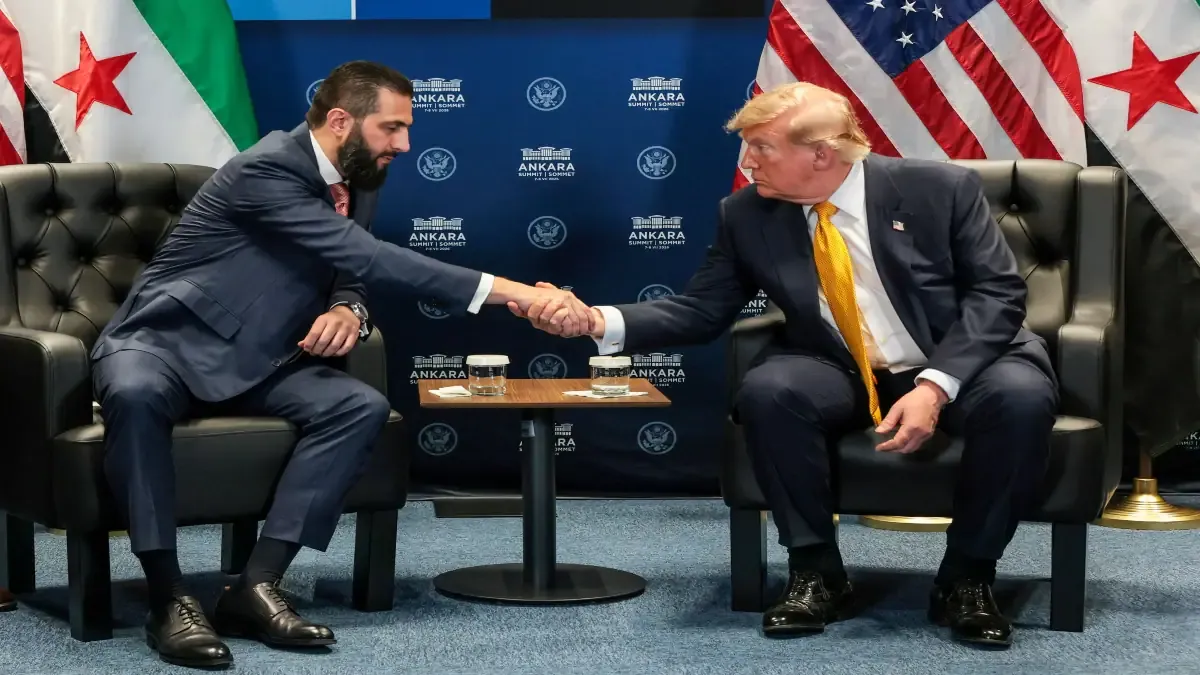
US President Donald Trump indicated plans to remove Syria from the US State Department's list of state sponsors of terrorism during a meeting with Syrian President Ahmed al-Sharaa at the NATO summit in Ankara. Trump praised al-Sharaa's leadership and Syria's stabilization, suggesting this move could facilitate foreign investment, reconstruction funding, and diplomatic normalization. The designation, in place since 1979, has hindered Syria's international engagement. Lawmakers from both US parties have supported delisting following the Assad regime's fall and al-Sharaa's rise. Trump also hinted at Syria's potential role in addressing Hezbollah-related issues in Lebanon.
First-hand measurement across 4 sources
We measured how 4 outlets covered this story. Coverage leans balanced overall (Left 8%, Centre 86%, Right 6%). Overall sentiment is neutral (59/100). Lens Score 34/100 — low public interest.
Outlets analysed (first-hand measurement by TBN's Bias Engine):
- thetribune— balanced framing, neutral sentiment
- wion— balanced framing, neutral sentiment
- firstpost— balanced framing, neutral sentiment
- news18— balanced framing, neutral sentiment
AI Analysis
The article group presents perspectives primarily from US political leadership and Syrian officials, focusing on policy shifts under President Trump. It includes bipartisan US legislative support for delisting Syria, reflecting a consensus on reassessing Syria's status post-Assad. Coverage emphasizes diplomatic and economic implications without partisan framing, representing both US government intentions and Syrian leadership achievements.
The overall tone across the articles is cautiously optimistic, highlighting progress in Syria's stabilization and potential benefits of removing the terrorism designation. Praise for Syrian President al-Sharaa and references to reconstruction and investment opportunities contribute to a positive sentiment. However, the coverage remains measured, acknowledging ongoing regional complexities and the historical context of Syria's designation.