US Plans to Remove Syria from State Sponsors of Terrorism List Amid Policy Shift
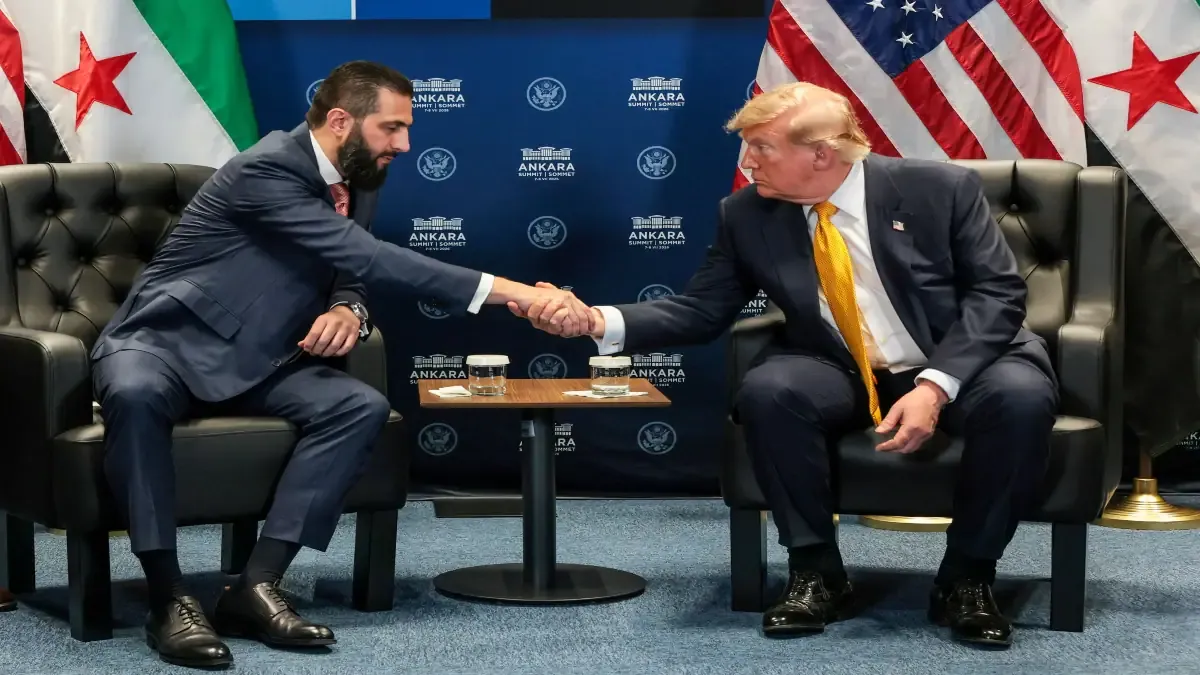
US President Donald Trump announced plans to remove Syria from the US State Department's list of state sponsors of terrorism, a designation in place since 1979. The decision follows the 2024 fall of Bashar al-Assad's regime and the rise of interim President Ahmed al-Sharaa, whom Trump praised for unifying Syria. The move, pending a 45-day congressional review, aims to facilitate foreign investment and reconstruction funding, with Gulf states expressing financial support. While welcomed by some, concerns remain from regional actors like Israel regarding Syria's role in regional security.
First-hand measurement across 10 sources
We measured how 10 outlets covered this story. Coverage leans balanced overall (Left 9%, Centre 83%, Right 8%). Overall sentiment is neutral (58/100). Lens Score 34/100 — low public interest.
Outlets analysed (first-hand measurement by TBN's Bias Engine):
- theprint— balanced framing, neutral sentiment
- ndtv— balanced framing, neutral sentiment
- moneycontrol— balanced framing, neutral sentiment
- moneycontrol— balanced framing, neutral sentiment
- moneycontrol— balanced framing, neutral sentiment
- businessstandard— balanced framing, neutral sentiment
- thetribune— balanced framing, neutral sentiment
- wion— balanced framing, neutral sentiment
AI Analysis
The article group presents perspectives primarily from US government officials and Syrian leadership, emphasizing the Trump administration's policy shift toward Syria under Ahmed al-Sharaa. It includes supportive views highlighting reconstruction and investment opportunities, while also noting regional concerns, particularly from Israel. The coverage reflects a focus on diplomatic and strategic considerations without overt partisan framing.
The overall tone across the articles is cautiously optimistic, highlighting potential economic and diplomatic benefits from Syria's delisting. Positive remarks about al-Sharaa's leadership and Syria's stabilization are balanced with acknowledgment of ongoing regional tensions and security concerns. The sentiment is generally neutral to positive, avoiding sensationalism while recognizing complexities.