Protests Erupt in Tamil Nadu Over Replacement of MGNREGA with VB-G RAM G Act
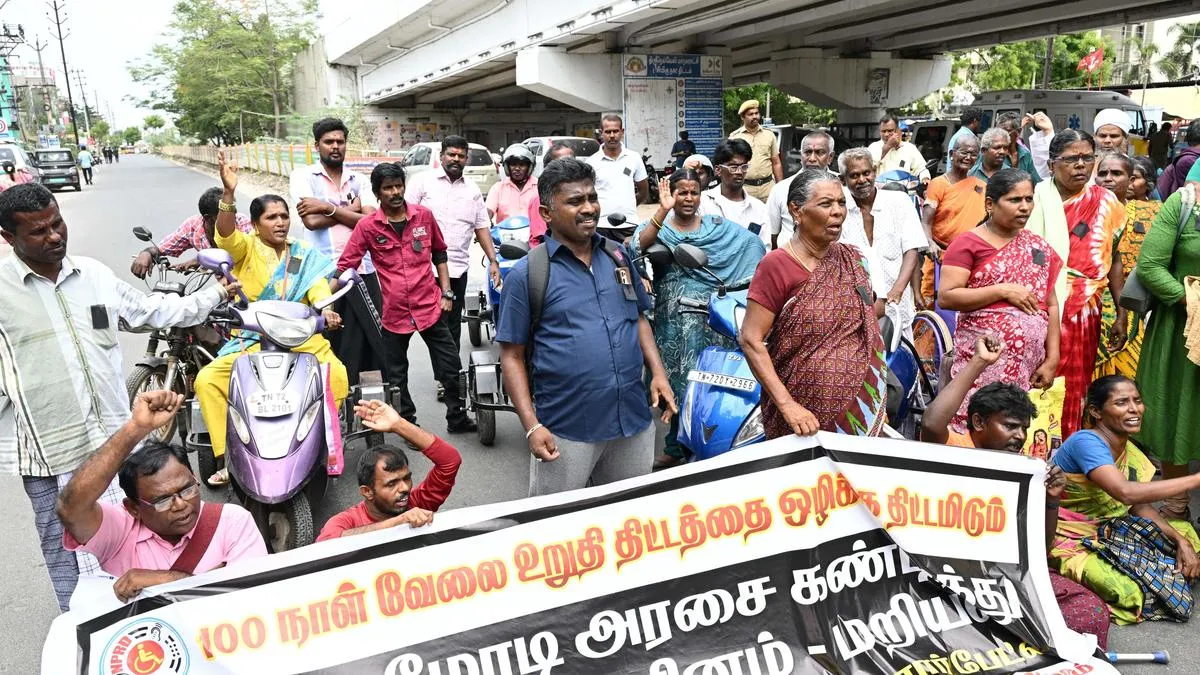
The implementation of the Viksit Bharat Guarantee for Rozgar and Ajeevika Mission (Gramin) Act (VB-G RAM G) on July 1, 2026, replacing MGNREGA, has sparked protests across Tamil Nadu. Demonstrators, including the Tamil Nadu Association for the Rights of All Types of Differently Abled and Caregivers (TARATDAC), oppose the scheme citing increased state financial burden, reduced employment guarantees, and adverse effects on differently abled workers. Critics argue the new act dilutes legal employment rights, shifts funding responsibilities to states, and limits work during peak agricultural seasons. Supporters emphasize the scheme's 125-day employment guarantee but face calls to restore MGNREGA's original provisions.
First-hand measurement across 7 sources
We measured how 7 outlets covered this story. Coverage leans left-leaning overall (Left 68%, Centre 28%, Right 4%). Overall sentiment is negative (31/100). Lens Score 34/100 — low public interest.
Outlets analysed (first-hand measurement by TBN's Bias Engine):
- thehindu— left-leaning framing, negative sentiment
- thehindu— left-leaning framing, negative sentiment
- thehindu— left-leaning framing, negative sentiment
- thehindu— left-leaning framing, negative sentiment
- news18— left-leaning framing, neutral sentiment
- thehindu— left-leaning framing, negative sentiment
- thehindu— left-leaning framing, negative sentiment
AI Analysis
The articles predominantly present perspectives critical of the Union government's replacement of MGNREGA with VB-G RAM G, highlighting opposition voices from activists, political leaders, and associations representing differently abled persons. The coverage includes concerns about increased state financial responsibility and reduced employment guarantees, reflecting a focus on state and civil society viewpoints. Supportive or neutral government perspectives are less emphasized, indicating a tilt toward opposition framing within the group.
The overall tone across the articles is critical and concerned, emphasizing protests, financial strain on states, and potential negative impacts on vulnerable populations like differently abled workers. Expressions of distress and demands for restoration of MGNREGA dominate, with limited positive or neutral sentiment regarding the new scheme. This results in a predominantly negative sentiment reflecting apprehension and resistance to the policy change.