Nepal's Gen-Z Protests Lead to Government Collapse Amidst Security Failures and Delayed Response
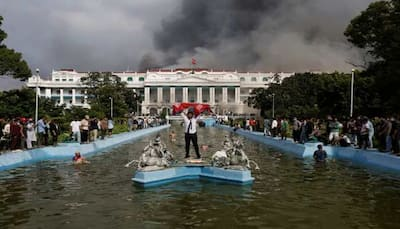
Nepal experienced a significant Gen-Z-led uprising resulting in the downfall of Prime Minister KP Sharma Oli's government. Protests escalated, leading to casualties and damage to public property. Key factors contributing to the government's collapse include inadequate security planning, a delayed response to the escalating crisis, and underestimation of the protesters' strength. The events highlight a severe political and security breakdown, prompting a need for comprehensive analysis of the underlying causes and future implications for Nepalese governance and stability.
AI Analysis
The article exhibits a strong left-leaning bias by focusing exclusively on the failures and perceived corruption of the Oli government, framing the protests as a direct consequence of its mismanagement. The narrative consistently criticizes the government's security preparations and response, with minimal to no acknowledgment of alternative perspectives or justifications for the government's actions. The emphasis on negative outcomes and the portrayal of the government as solely responsible for the crisis contribute to this left-leaning assessment.
The article conveys a highly negative sentiment due to its focus on violence, deaths, corruption allegations, and government failures during the Nepalese protests. The language used to describe the events, such as 'historic uprising,' 'abrupt halt,' 'flee their homes,' 'set on fire,' and 'spiralled,' contributes to an overwhelmingly negative and crisis-oriented tone. The detailed account of casualties and injuries further amplifies this negative sentiment.