Kolkata Demolition Drives Impact Longstanding Hawker Community and Street Food Culture
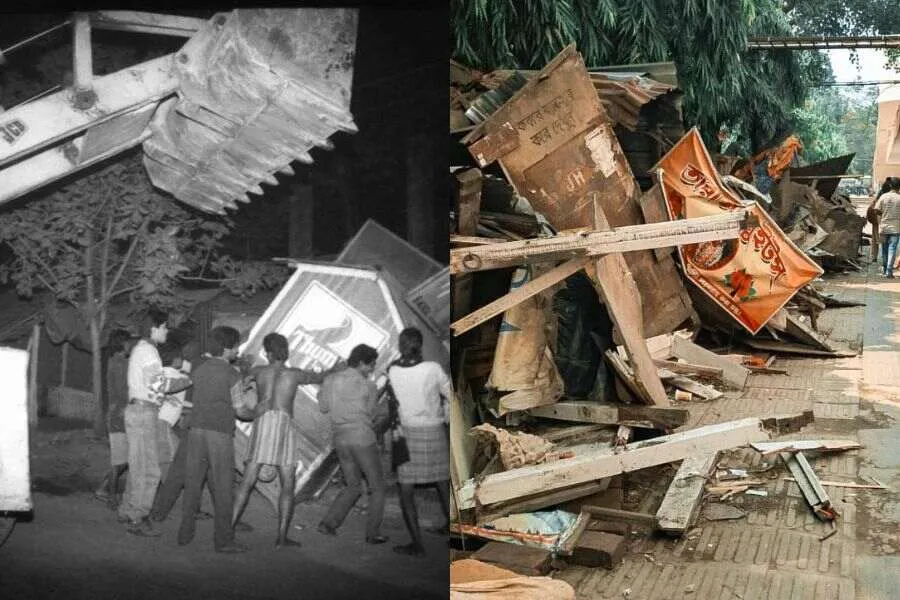
Recent demolition drives in Kolkata have targeted thousands of hawkers, dismantling stalls at locations including Howrah, Sealdah, Jadavpur, and Dumdum stations. Authorities cite illegal encroachments blocking pedestrian pathways and railway access as reasons. Hawkers, many operating for decades and integral to Kolkata's street food culture, express fears over job loss and lack of resettlement plans. Historically, hawking in Kolkata dates back to colonial times and expanded during crises like the 1943 famine and Partition, reflecting deep social and economic roots.
First-hand measurement across 2 sources
We measured how 2 outlets covered this story. Coverage leans left-leaning overall (Left 66%, Centre 32%, Right 2%). Overall sentiment is negative (32/100). Lens Score 39/100 — moderate-to-low public interest.
Outlets analysed (first-hand measurement by TBN's Bias Engine):
- thetelegraph— left-leaning framing, negative sentiment
- indianexpress— left-leaning framing, neutral sentiment
AI Analysis
The articles present perspectives highlighting government actions against hawker encroachments alongside the socio-economic challenges faced by hawkers. They reference both past and present administrations enforcing similar policies, without endorsing any political party. The coverage includes official rationales for clearance drives and hawkers’ concerns, reflecting a balanced view of governance and grassroots impact.
The overall tone is mixed, combining factual reporting of government demolition efforts with empathetic accounts of hawkers’ hardships. While the authorities’ focus on pedestrian access is acknowledged, the narrative also conveys the distress and uncertainty experienced by hawkers, resulting in a nuanced sentiment that neither fully condemns nor endorses the actions.
How 2 sources covered this story
Each source's own headline, political lean, and sentiment — so you can see framing differences at a glance.