Skip to content
Get the Balanced News app for a better experience!
The Balanced News Logo
Analytics
The Balanced News Logo

Stay Balanced, Stay Informed

Menu
  • Browse News
  • Underreported Stories
  • Curated Feeds
  • Insights
  • Analytics
  • Our Writers
  • About Us
  • Download App
Learn
  • How It Works
  • Bias Detection
  • Lens Score
  • Source Bias Checker
  • Accountability
  • Custom Feeds
Newsroom
  • Writers & Analysts
  • About TBN
  • Editorial Standards
  • Corrections Policy
  • Our Partners
  • Insights
Socials
  • Youtube
  • Instagram
  • X
  • Facebook
News Categories
  • Trending
  • Politics
  • Sports
  • Business
  • Tech
  • Entertainment
  • Health
  • Science
  • Crime
  • Lifestyle
  • National
  • International
  • Good News
  • Crypto

Get Our App

Available for iOS and Android


LensFeedsInsightsAnalyticsTrendingGood NewsSportsPoliticsBusinessCrimeTechEntertainmentHealthNationalInternational

© 2026 The Balanced News. All rights reserved.

About UsEditorial StandardsCorrectionsHelp & SupportPrivacy PolicyTerms & Conditions
Florida Researchers Use Robotic Rabbits to Detect Invasive Burmese Pythons
Categories

Categories

Related Coverage

Select a news story to see related coverage from other media outlets.

Related Coverage

Select a news story to see related coverage from other media outlets.

  1. Home
  2. /
  3. Social

Florida Researchers Use Robotic Rabbits to Detect Invasive Burmese Pythons

Analysed 23 Nov 2026·2 sources analysed·Florida, United States·Social
Florida Researchers Use Robotic Rabbits to Detect Invasive Burmese PythonsPreviousNext

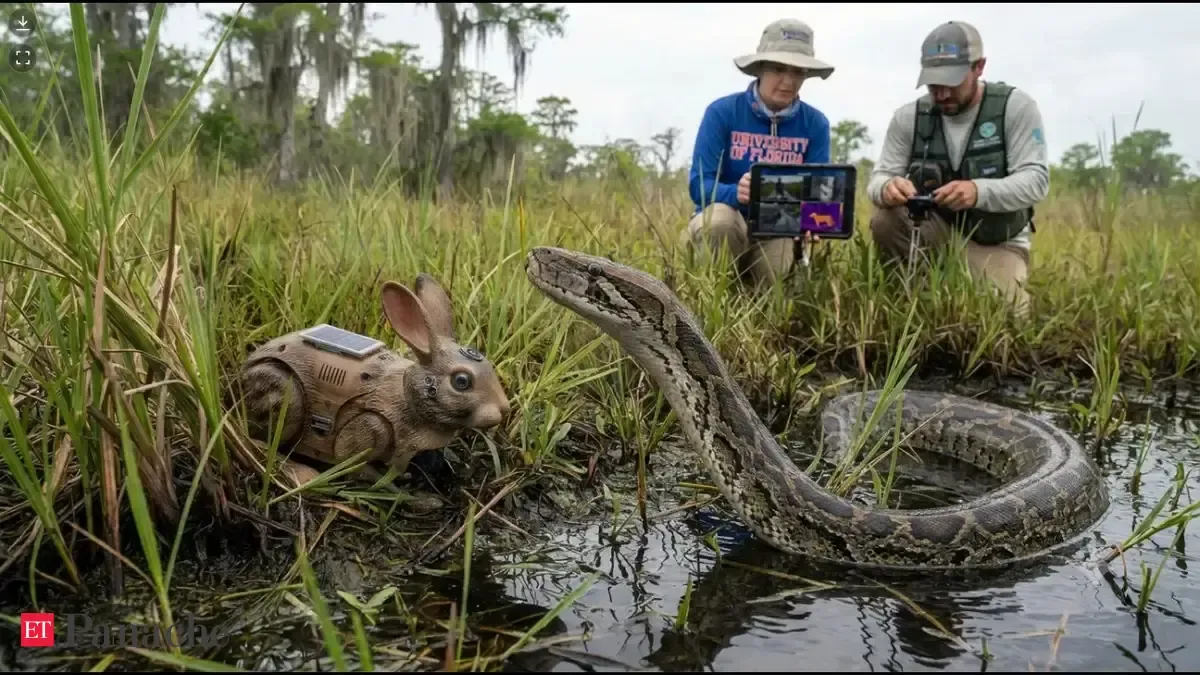
Researchers in Florida are testing robotic rabbits designed to mimic real marsh rabbits through movement, heat, and scent to attract invasive Burmese pythons in the Everglades. Equipped with cameras, these solar-powered decoys help wildlife teams detect and remove the elusive snakes threatening native species. The project, involving the University of Florida and the South Florida Water Management District, combines robotics and wildlife research to improve python management in dense wetland environments.

Sentiment
70%
TBN's observations

First-hand measurement across 2 sources

We measured how 2 outlets covered this story. No outlet gave this story a measurable political slant — there is no left–right reading to report. Overall sentiment is positive (70/100). Lens Score 42/100.

Outlets measured: economictimes, economictimes. See how each one headlined and framed the same story in the source comparison below.

AI analysis of 2 sources · Published under editorial oversight by The Balanced News
Analysed 23 Nov 2026· How this analysis is produced· Editorial standards· Corrections

AI Analysis

Sentiment — Positive (70/100)

Sentiment was consistent across outlets (65–75/100), indicating broadly factual reporting rather than editorialising.

Coverage timeline

economictimes broke this story on 23 Nov, 01:03 pm. Other outlets followed.

23 Nov, 01:03 pm2 sources · 21 min23 Nov, 01:24 pm
AI analysis by the TBN Bias Engine · beat methodology byAniket Awate· Culture & Digital Media Writer· editorial standards byOjas Kale
← Previous
Madurai Police Ban Drone Use Over Thirupparankundram Hill Ahead of Karthigai Deepam
Next →
Doctors Perform Emergency Surgery to Remove Pipe from Man's Abdomen in Rajasthan
1
economictimes23 Nov, 01:03 pm
They look like real bunnies, but these robot rabbits have a mission to save Florida's everglades; here's how
  • 2
    economictimes23 Nov, 01:24 pm
    They look like real bunnies, but these robot rabbits have a mission to save Florida's Everglades from invasive Burmese pythons; here's how scientists came up with AI technology
  • Who's involved

    Institutions and figures named across source coverage.

    Government
    South Florida Water Management District

    Story context

    Category
    Social
    Location
    Florida, United States
    Sources analysed
    2
    Last analysed
    23 Nov 2026
    Key entities
    Marsh rabbitBurmese pythonPythonidaeEvergladesRabbitSnakeInvasive speciesRobotWildlifePredationFloridaSolar power