Debate Continues Over Role of Traditional and Alternative Medicine in India
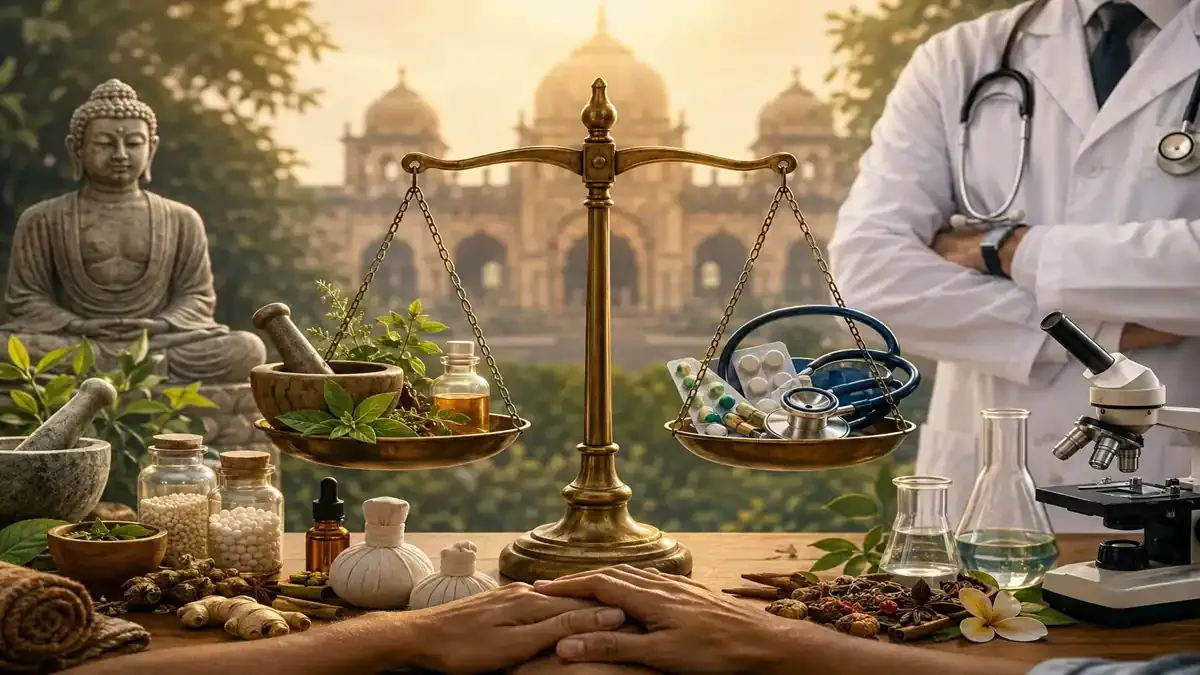
India's healthcare system officially recognizes multiple traditional medical systems, including Ayurveda, Yoga, Unani, Siddha, Sowa-Rigpa, and Homeopathy, alongside modern medicine under the Ministry of AYUSH. While these practices have longstanding cultural significance and regulatory frameworks, recent debates have emerged over their scientific validity and role. Advocates emphasize respectful, evidence-based discussion without personal attacks, while critics question the epistemic foundations of traditional and alternative medicines compared to modern scientific approaches.
First-hand measurement across 2 sources
We measured how 2 outlets covered this story. Coverage leans balanced overall (Left 25%, Centre 73%, Right 2%). Overall sentiment is neutral (55/100). Lens Score 21/100 — low public interest.
Outlets analysed (first-hand measurement by TBN's Bias Engine):
- indianexpress— balanced framing, neutral sentiment
- firstpost— balanced framing, neutral sentiment
AI Analysis
The articles reflect a range of perspectives on India's pluralistic medical system, including support for preserving traditional practices and calls for critical, evidence-based scrutiny. One source highlights cultural and regulatory recognition of diverse medical systems, while the other frames the debate in epistemic terms, questioning the primacy of modern science. Both viewpoints are presented without overt political alignment, focusing instead on cultural, scientific, and intellectual considerations.
The overall tone is measured and analytical, emphasizing the need for balanced debate and respect for differing views. Coverage acknowledges both the cultural importance of traditional medicine and the necessity of scientific evaluation, avoiding sensationalism or strong criticism. The sentiment is thus mixed but constructive, encouraging dialogue rather than confrontation.