Skip to content
Get the Balanced News app for a better experience!
The Balanced News Logo
Analytics
The Balanced News Logo

Stay Balanced, Stay Informed

Menu
  • Browse News
  • Underreported Stories
  • Curated Feeds
  • Insights
  • Analytics
  • Our Writers
  • About Us
  • Download App
Learn
  • How It Works
  • Bias Detection
  • Lens Score
  • Source Bias Checker
  • Accountability
  • Custom Feeds
Newsroom
  • Writers & Analysts
  • About TBN
  • Editorial Standards
  • Corrections Policy
  • Our Partners
  • Insights
Socials
  • Youtube
  • Instagram
  • X
  • Facebook
News Categories
  • Trending
  • Politics
  • Sports
  • Business
  • Tech
  • Entertainment
  • Health
  • Science
  • Crime
  • Lifestyle
  • National
  • International
  • Good News
  • Crypto

Get Our App

Available for iOS and Android


LensFeedsInsightsAnalyticsTrendingGood NewsSportsPoliticsBusinessCrimeTechEntertainmentHealthNationalInternational

© 2026 The Balanced News. All rights reserved.

About UsEditorial StandardsCorrectionsHelp & SupportPrivacy PolicyTerms & Conditions
Meghalaya's Living Root Bridges: Traditional Structures Growing Stronger Over Decades
Categories

Categories

Related Coverage

Select a news story to see related coverage from other media outlets.

Related Coverage

Select a news story to see related coverage from other media outlets.

  1. Home
  2. /
  3. Social

Meghalaya's Living Root Bridges: Traditional Structures Growing Stronger Over Decades

Analysed 21 Aug 2026·2 sources analysed·Meghalaya, India·Social
Meghalaya's Living Root Bridges: Traditional Structures Growing Stronger Over DecadesPreviousNext

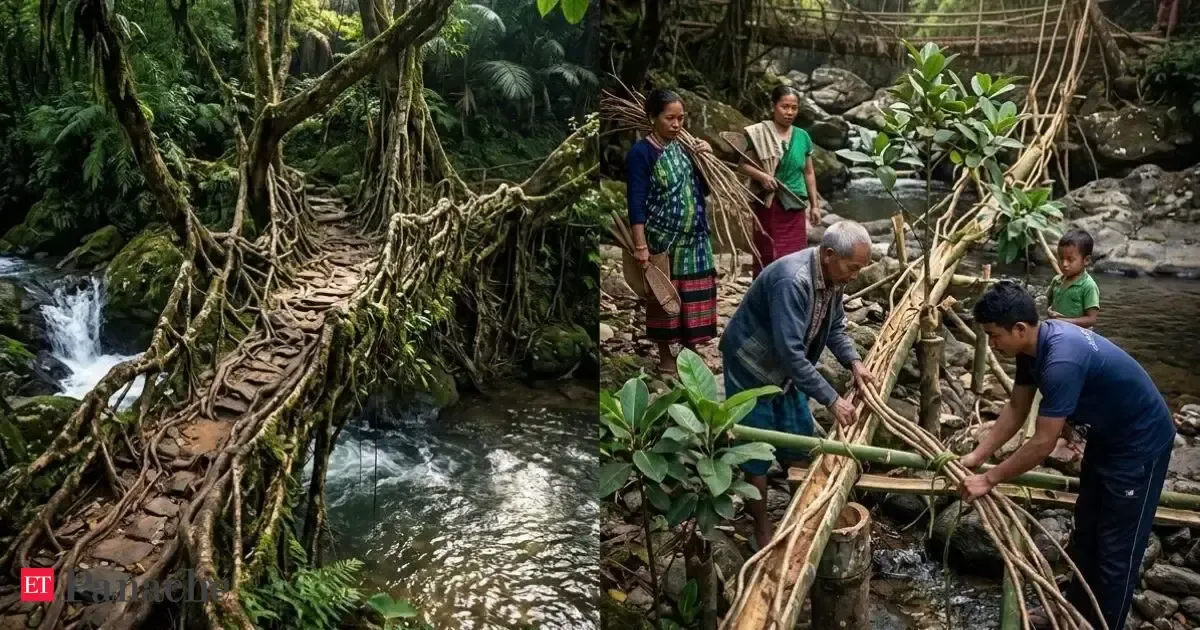
The Khasi and Jaintia tribes of Meghalaya have developed living root bridges by guiding the aerial roots of rubber fig trees across rivers and ravines. These natural bridges take 15 to 30 years to become usable and strengthen over time as roots thicken and intertwine. With around 100 known bridges, this indigenous practice combines sustainability and traditional engineering, attracting global recognition including provisional UNESCO status. These bridges serve as vital pathways connecting villages and plantations in Meghalaya's hilly terrain.

Sentiment
75%
TBN's observations

First-hand measurement across 2 sources

We measured how 2 outlets covered this story. No outlet gave this story a measurable political slant — there is no left–right reading to report. Overall sentiment is positive (75/100). Lens Score 31/100.

Outlets measured: economictimes, news18. See how each one headlined and framed the same story in the source comparison below.

AI analysis of 2 sources · Published under editorial oversight by The Balanced News
Analysed 21 Aug 2026· How this analysis is produced· Editorial standards· Corrections

AI Analysis

Sentiment — Positive (75/100)

Sentiment was consistent across outlets (75–75/100), indicating broadly factual reporting rather than editorialising.

Coverage timeline

news18 broke this story on 21 Aug, 07:53 am. Other outlets followed.

21 Aug, 07:53 am2 sources · 8 h21 Aug, 04:01 pm
AI analysis by the TBN Bias Engine · beat methodology byAniket Awate· Culture & Digital Media Writer· editorial standards byOjas Kale
← Previous
Truck Falls Into Road Collapse During Pothole Repair Work in Nashik
Next →
Startup Founder Questions Tradition of Touching Elders' Feet Based on Age
1
news1821 Aug, 07:53 am
Planning A Meghalaya Trip? Don't Miss These 6 Living Root Bridges
  • 2
    economictimes21 Aug, 04:01 pm
    No steel, concrete, or cement: Meghalaya's living bridges take 30 years to grow but get stronger with age. How villagers create them from tree roots
  • Story context

    Category
    Social
    Location
    Meghalaya, India
    Sources analysed
    2
    Last analysed
    21 Aug 2026
    Key entities
    Living root bridgePnar peopleKhasi peopleMeghalayaFicus elasticaAerial rootFicusSteelCementConcreteNatural rubberIndigenous peoples