TL;DR
India just kicked off its biggest-ever AI summit at Bharat Mandapam, New Delhi, with Macron, Sam Altman, Sundar Pichai, and 20 heads of state in attendance. But the real story isn't on stage. It's playing out in Parliament, where Rahul Gandhi has accused the Modi government of selling India's data to the US through a lopsided trade deal. The question nobody's answering clearly: can India lead global AI while handing over the keys to its data kingdom?
The Summit: India's AI Coming-Out Party
The India AI Impact Summit 2026 runs February 16-20 at Bharat Mandapam, New Delhi. It's the first major global AI summit hosted in the Global South, and India has pulled out all the stops.
Who's there: - 20 heads of state including French President Macron and Brazilian President Lula - Sam Altman (OpenAI), Sundar Pichai (Google), Dario Amodei (Anthropic), Demis Hassabis (DeepMind) - Delegations from 135+ countries, 50+ international ministers, 100+ CEOs
Who's not: Nvidia CEO Jensen Huang pulled out two days before the event citing "unforeseen circumstances." Given that Nvidia's chips power most of the world's AI infrastructure, that absence stings.
The summit's theme is "Sarvajana Hitaya" (welfare for all), built around what PM Modi called India standing "at the forefront of AI transformation."
What India Is Proposing
India released its AI Governance Guidelines anchored by seven "sutras" (principles). The approach is deliberately light-touch and innovation-first, positioning India as an alternative to both the EU's heavy regulation and the US's laissez-faire approach.
| Principle | What It Means |
|---|---|
| Trust | AI systems must be trustworthy and transparent |
| Innovation over restraint | Don't regulate AI to death |
| Inclusive growth | AI benefits must reach all, not just the elite |
| Evidence-based regulation | Rules based on data, not panic |
| Risk-based approach | Regulate high-risk AI, leave low-risk alone |
| Development focus | Prioritize impact in health, agriculture, education |
| DPI integration | Build AI on India's existing digital infrastructure |
Three new institutions were proposed: an AI Governance Group (AIGG), Technology and Policy Expert Committee (TPEC), and an AI Safety Institute (AISI).
The Big Tech Charm Offensive
Sam Altman was especially bullish. "India has all the ingredients to be a full-stack AI leader," he said, noting that India has surged to become OpenAI's second-largest user base globally, behind only the US. That's 100 million ChatGPT users.
Sundar Pichai, Dario Amodei, and Qualcomm's Cristiano Amon are also in attendance, each making commitments to expand in India.
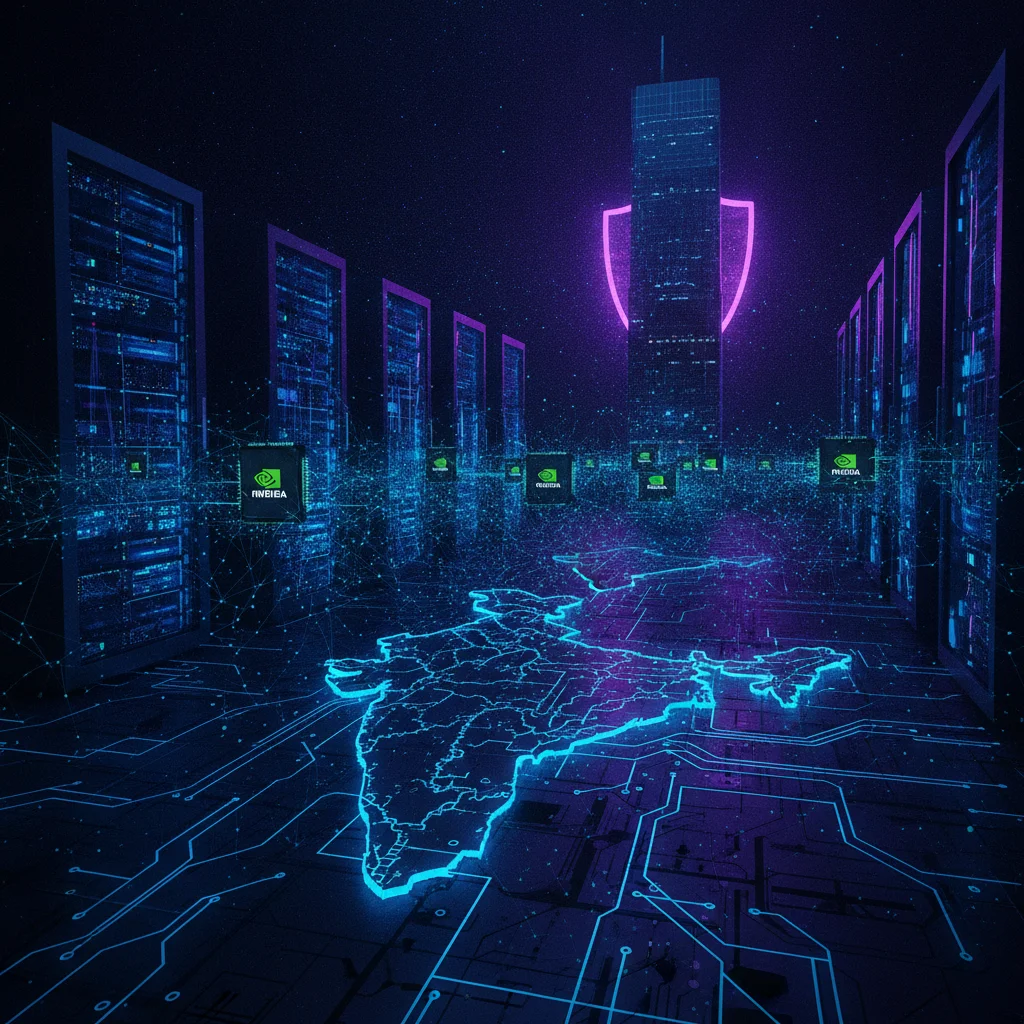
Sounds great on paper. But here's the uncomfortable question: if India is hosting Big Tech CEOs while simultaneously signing a trade deal that gives those same companies unrestricted access to Indian data, is this a leadership summit or a customer acquisition event?
The Data Sovereignty Bombshell
Five days before the summit opened, on February 11, Rahul Gandhi stood up in Lok Sabha and dropped a political grenade.
"Indian data is the world's most valuable asset. Data is the petrol which fuels the AI engine. We have the biggest data pool on the planet, 1.4 billion people means a massive amount of data is being generated, and data is wealth."
His target: the India-US interim trade deal signed in early February, which he called a "wholesale surrender."
What's Actually in the Trade Deal?
The digital trade provisions are where things get spicy. According to Gandhi's reading of the deal:
| Provision | What It Means |
|---|---|
| Unrestricted cross-border data flows | Indian user data can flow freely to US servers |
| Diluted data localization | India can't mandate that data stays within borders |
| Digital services tax removal | India can't tax US tech giants' digital revenue |
| Source code disclosure waiver | India can't demand to see how algorithms work |
| 20-year tax holidays | US tech companies get extended breaks |
Gandhi's most pointed critique connected the trade deal directly to the AI summit:
He offered a counter-strategy: "If the INDIA alliance was negotiating with President Trump, what we would say is that the most important thing in this equation is Indian data. President Trump, if you want access to this data, please understand that you are going to talk to us as an equal."
The Government Fires Back
The BJP didn't take this lying down.
Finance Minister Nirmala Sitharaman accused Congress of surrendering India's interests at the WTO back in 2013, calling out the Bali Agreement under UPA.
Parliamentary Affairs Minister Kiren Rijiju called Gandhi's claims "illogical," saying "no one can sell Mother India."
BJP formally labeled the accusations a "blatant lie."
But notably, no one offered a detailed rebuttal of the specific digital trade provisions Gandhi cited. The response was more emotional than technical.
The Bigger Picture: Lead or Serve?
Strip away the politics and there's a genuine strategic dilemma here.
India has real advantages. 1.4 billion people generating massive data. A strong developer talent pool. Existing digital public infrastructure (UPI, Aadhaar, DigiLocker) that most countries would kill for. A government that clearly wants to be an AI power.
But the dependency problem is real. As Rest of World noted, despite India's "third way" messaging, its digital payments are dominated by Google Pay and PhonePe (Walmart). The question: will Indian AI startups be "more than barnacles on the hull of Big Tech companies that still control the underlying computing and foundation model infrastructure?"
Here's the uncomfortable math:
| What India Has | What India Needs (From US) |
|---|---|
| 1.4 billion data producers | AI chips (Nvidia, AMD) |
| Developer talent pool | Foundation models (GPT, Gemini, Claude) |
| Digital public infrastructure | Cloud infrastructure (AWS, Azure, GCP) |
| Government ambition | Capital investment |
You can't build sovereign AI on someone else's hardware and models. And if the trade deal ensures that Indian data flows freely to US companies who train their models on it, India risks becoming AI's largest data supplier rather than its next leader.
Civil Society Isn't Buying It Either
A report released just before the summit by the Center for the Study of Organized Hate and Internet Freedom Foundation flagged the gap between India's stated commitment to inclusive AI and reported misuse. Their concerns: AI being used for surveillance, predictive policing, discrimination in public services, and targeting of religious minorities.
They also pointed to the recent IT Rules amendment requiring 3-hour takedowns of "unlawful" synthetic content, which critics say could enable censorship rather than safety.
What Happens Next
The summit runs through February 20. The working groups will produce reports on seven themes: human capital, inclusion, safe AI, resilience, science, democratizing AI resources, and economic development.
But the real test isn't the summit communique. It's what happens after:
- Will India build indigenous AI infrastructure? Or keep relying on US chips and models?
- Will the trade deal's digital provisions be revisited? The full deal is still being negotiated.
- Will the governance framework have teeth? Or will the seven sutras remain aspirational?
- Will Indian data be leveraged for India's benefit? Or will it fuel US AI dominance?
As the Deccan Herald put it: India is at an AI crossroads. The choice is between leading and serving. The summit is a step toward leading. The trade deal looks a lot like serving.
The question is whether India can do both at once. History suggests you can't.
Sources
- India AI Impact Summit Official Site
- CNBC - India AI Summit draws tech CEOs
- Hindustan Times - Who's attending AI Summit 2026
- Sam Altman on India as full-stack AI leader
- PM Modi on AI transformation
- AI Governance Guidelines - Seven Sutras
- Rahul Gandhi's Lok Sabha speech
- Gandhi on data as AI fuel
- Gandhi's counter-negotiation strategy
- India-US interim trade deal details
- Sitharaman's WTO counter-attack
- BJP calls allegations "blatant lie"
- Jensen Huang withdraws from summit
- Rest of World - India's "third way" skepticism
- The Wire - AI governance and democratic backsliding report
- Deccan Herald - India's AI crossroads
- Tribune India - Summit opens
- The Hindu - Trade deal one-sided
- France24 - India hosts AI summit
- Economic Times - AI Summit insights