TL;DR
India made history as the first Global South nation to host a top-tier AI summit, drawing 20+ heads of state, $2.3 billion in announced investments, and 250,000+ visitors to Bharat Mandapam. But Day 1 was marred by a 6-hour lockout that left startup founders stranded, patented products stolen inside a "high-security zone," and an event that critics say prioritized spectacle over substance.
The Good: Billion-Dollar Deals and Global Positioning
India Claims the AI Stage
The India AI Impact Summit 2026 (February 16-20, Bharat Mandapam, New Delhi) is the fourth in a series that began at Bletchley Park (UK, 2023), moved to Seoul (2024), and Paris (2025). India is the first Global South nation to host it, and the scale was unmistakable: 100+ countries, 500+ sessions, 3,250+ speakers, 300+ exhibitors across 70,000 square meters.
The theme, "Sarvajana Hitaya, Sarvajana Sukhaya" (Welfare for All, Happiness for All), was anchored in "People, Planet, and Progress." Whether the event lived up to that motto is a separate question.
The Money Rolled In
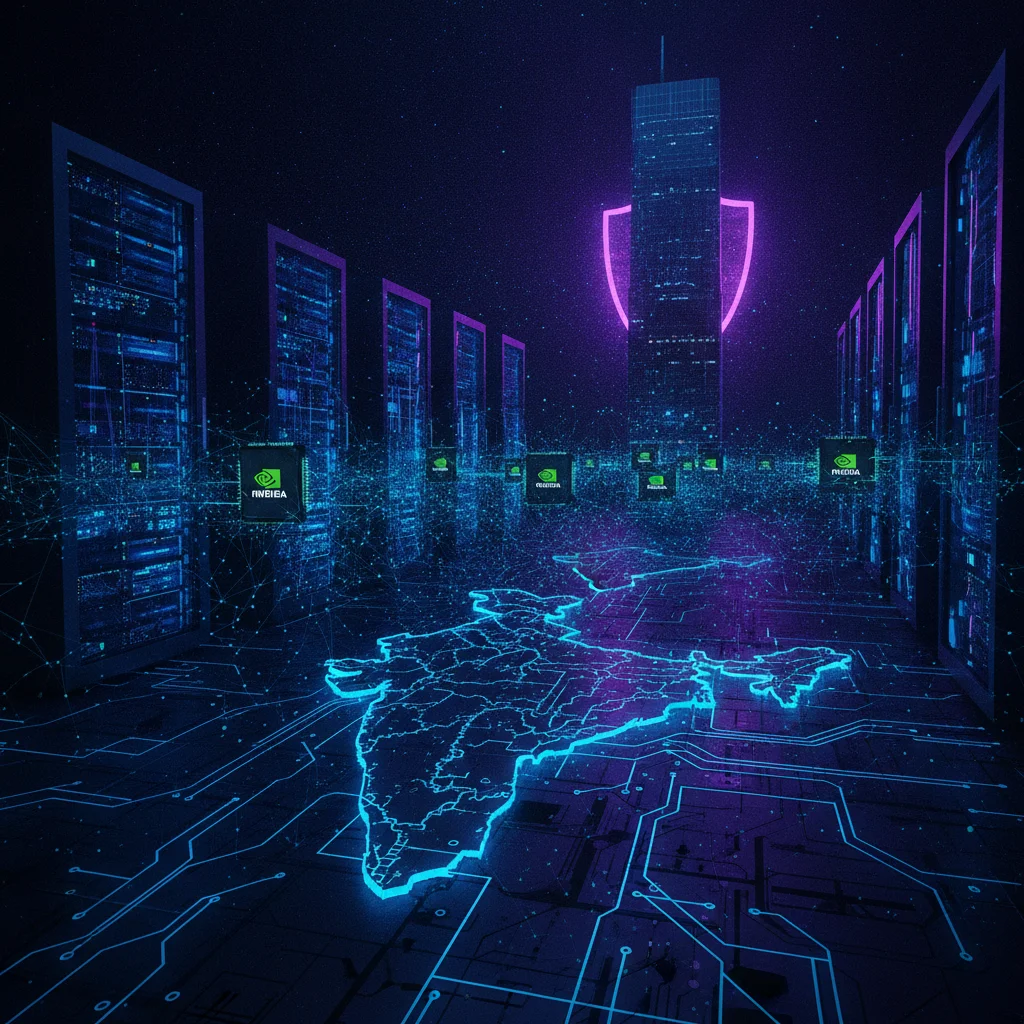
The headline deal: Blackstone led a $600 million equity round in Indian AI startup Neysa, with total financing exceeding $1.2 billion when debt is included. The plan is to scale from around 1,200 GPUs to 20,000+ for AI training and high-performance compute.
Beyond Neysa: - India earmarked $1.1 billion for a state-backed VC fund focused on AI and advanced manufacturing startups - Anthropic announced its first Indian office in Bengaluru, confirming India as its second-largest market after the US - AMD partnered with TCS to build rack-scale AI infrastructure using AMD's "Helios" platform - Sam Altman confirmed India has 100 million weekly active ChatGPT users, making it OpenAI's second-largest market
The IndiaAI Mission: Real Progress
Behind the summit fanfare, the IndiaAI Mission has quietly delivered:
| Metric | Status |
|---|---|
| National GPU capacity | 38,000+ GPUs (including 1,050 Google Trillium TPUs) |
| Government outlay | Rs 10,371 crore (~$1.25 billion) |
| Indigenous foundation models | 12 in development across 22 Indian languages |
| Compute cost | Rs 65/hour (subsidized) |
| India Data and AI Labs | 27 established, 543 more identified |
| Semiconductor projects approved | $18 billion across 10 projects |
Sarvam AI and Soket AI were each selected to develop open-source 120-billion-parameter foundation models for defense, healthcare, governance, and education. India's targeting 7nm chip capability by 2030, 3nm by 2032.
Diplomatic Wins
French President Macron attended on his fourth visit to India. The two leaders inaugurated the India-France Year of Innovation 2026, building on a bilateral AI declaration signed in 2025. Brazil's Lula, Spain's Sanchez, Sri Lanka's Disanayaka, and 20+ other leaders were also present. The World Bank partnered on AI-for-development initiatives.
Chip milestone: Micron's $2.75 billion facility in Gujarat is set to begin commercial production by end of February. India's first commercial-scale semiconductor facility. Also working on high-bandwidth memory (HBM) critical for AI compute.
The Bad: Chaos, Hard Truths, and Unfulfilled Promises
Day 1 Was a Disaster
Business Standard called it "marked by overcrowding, organisational lapses." The Free Press Journal was blunter: "Overcrowding, Poor Connectivity, No Water."
What went wrong: - 3-hour queues just to enter - Registration system crashed multiple times - Wi-Fi completely non-functional throughout the venue - All food stalls went cash-only because UPI failed (at a tech summit) - No drinking water in large sections - Laptops banned at entry, undisclosed in advance - Speakers due on Day 2 still hadn't received session confirmations
Punit Jain, founder of Reskilll, posted on X: "An AI Summit that sidelines its own builders? 7 am: Queues, 9 am: Entry, 12 pm: Full evacuation. Meanwhile, exhibitors, delegates, and startup founders left outside. No water. No clarity."
The Job Destruction Warning No One Wanted
The most uncomfortable moments came from the speakers themselves.
Vinod Khosla (Khosla Ventures) predicted IT services and BPOs could "almost completely disappear" within five years. Robotic labor at $2-3 an hour, not $20. Even doctors, lawyers, and accountants face disruption within 15 years.
Vineet Nayar (former HCL CEO) was more direct: "If you believe that [Indian IT companies] are going to create employment you must be dreaming." He also pointed out a harder truth: "Unfortunately, in India, we never develop products, so therefore we do not have SLMs and LLMs which are world-class."
Investment bank Jefferies separately projected call centres could face a 50% revenue hit from AI by 2030. Indian IT stocks dipped during the summit on AI disruption fears.
India Still Can't Buy the Best Chips
Despite $67.5 billion in Big Tech commitments and $18 billion in semiconductor projects, India remains outside the US Tier 1 list for advanced AI chips. The Biden administration's January 2025 framework formally categorized India below the threshold for the most powerful Nvidia GPUs. India was also initially excluded from the Pax Silica Summit (US chip alliance, December 2025).
This creates an uncomfortable dependency: India is building sovereign AI infrastructure using chips it needs American permission to buy.
Civil Society Got the Back Row
TechPolicy.Press analyzed the summit's 793 public events and found government bodies organized roughly 40% of sessions, multinationals another 35%. There was no "Civil Society Plenary" to match the "CEO Roundtable" or "Leaders' Plenary." Terms like "Human Rights," "Accountability," "Surveillance," "Bias," and "Discrimination" were largely absent from high-level session titles.
No Binding Outcome
Like every previous AI summit, the outcome will be at most a non-binding pledge. No enforceable commitments. Critics of all four editions note they've produced "few enforceable outcomes" despite enormous resources.
The Ugly: Theft, Evictions, and Weaponized AI
The 6-Hour Lockout and Missing Prototypes
This is the story that defined Day 1 for the people who actually built things.
At noon, security arrived and cordoned off the entire exhibition area ahead of PM Modi's scheduled visit. All gates shut for 6 hours. Exhibitors, startup founders, delegates, and media were locked outside or physically evacuated with no advance warning.
Maitreya Wagh, co-founder of AI voice startup Bolna, couldn't access his own booth and jokingly suggested setting up a "mini-booth at a Connaught Place cafe."
Dhananjay Yadav, CEO of NeoSapien, had it worse. Told by security to leave and that "security will take care of items left behind," he returned after the lockout to find his patented AI wearables stolen from inside the "high-security zone."
His question on X went viral: "If only security and official entourage had access during those 6 hours, how did the theft happen?"
As of reporting, neither the summit organizers nor Delhi Police had contacted him.
Bill Gates, Epstein, and the Vanishing Name
Bill Gates was originally listed as a "Global Visionary" and keynote speaker. After the US Department of Justice released millions of pages of Epstein files in early 2026 (which included references to Gates), his name was quietly removed from the summit website. No official explanation given.
Indian government sources told NDTV they wished to "stand with the survivors." But the Gates Foundation contradicted them: "Bill Gates will deliver his keynote as scheduled. Those reports are simply not true." Gates arrived in India, first landing in Andhra Pradesh. The mixed signals were embarrassing.
Nvidia CEO Jensen Huang also withdrew at the last minute citing "unforeseen circumstances." No further explanation.
The BJP AI "No Mercy" Video
Just one week before India positioned itself as the global champion of responsible AI, the BJP's Assam state unit uploaded an AI-generated video to X showing Chief Minister Himanta Biswa Sarma shooting at two visibly Muslim men. One target appeared to be a morphed image of opposition leader Gaurav Gogoi wearing a skullcap. Titled "No Mercy."
The video was deleted after public outrage. The timing could not have been worse for a government hosting a summit themed around "Welfare for All."
AI for Surveillance, Not Just Service
A joint report by the Center for the Study of Organized Hate (CSOH) and the Internet Freedom Foundation (IFF) documented:
- Facial recognition technology deployed across Delhi, Hyderabad, Bengaluru, and Lucknow without independent oversight
- Maharashtra CM Devendra Fadnavis announced an AI system to identify "Bangladeshi immigrants and Rohingya refugees" through speech pattern analysis. Experts warn this targets Bengali-speaking Muslim communities
- Several states running predictive policing pilots that replicate historical biases
- India's AI governance guidelines explicitly reject a separate AI law and have no mandatory transparency requirements
The India Hate Lab recorded 1,318 hate speech events in 2025, averaging more than 3 per day, with 98% targeting Muslims.
Homeless Evicted for VIP Optics
In a repeat of the G20 2023 playbook, authorities forcibly evicted homeless people from Mathura Road and multiple arterial routes leading to Bharat Mandapam.
Apar Gupta, founder of the Internet Freedom Foundation, wrote: "Young boys were applying enamel paint on the railings in Mathura Road in peak morning traffic with their bare hands to prepare for the arrival of Silicon Valley CEOs."
An AI summit themed "Welfare for All" that hides its poorest citizens from view. That contradiction writes itself.
The Sovereignty Paradox
Rest of World noted the fundamental tension in India's positioning: it pitches "digital sovereignty" while hosting and celebrating the very US Big Tech companies it claims to provide an alternative to. "Sovereignty-as-a-service" sold back to governments by the same firms. India's "third way" exists mostly in speeches, not in the chip supply chains that actually determine AI power.
Meanwhile, Trump trade adviser Peter Navarro publicly asked why Americans are "paying for AI in India," suggesting strong action. The US delegation arrived with an agenda of "domination", not partnership.
The Verdict
The India AI Impact Summit 2026 is genuinely significant. $2.3 billion in investments, 38,000+ GPUs, India's first commercial chip production, 12 indigenous language models. These are real achievements.
But the execution told a different story. The country building AI for 1.4 billion people couldn't manage water bottles, Wi-Fi, or entry queues for 250,000 visitors. Startup founders had their products stolen inside a high-security zone while VIPs filmed content for Instagram. Homeless citizens were swept off roads so Silicon Valley CEOs wouldn't see them.
The investments are real. The progress on compute and indigenous AI models is real. But so is the gap between what India announced at the podium and what happened on the ground floor.
The real test isn't whether India can host a summit. It's whether the AI it's building will serve all of its 1.4 billion citizens, or just the ones who got past security.
Sources
- India AI Impact Summit Official Site
- TechCrunch: Blackstone backs Neysa in $1.2B financing
- TechCrunch: All important news from the India AI Summit
- CNBC: India AI Impact Summit tech CEOs in New Delhi
- PIB: IndiaAI Mission details
- DD News: 38,000 GPUs and AI Mission vision
- Business Standard: Day 1 overcrowding and lapses
- Free Press Journal: Overcrowding, no water, chaos
- BusinessToday: Vinod Khosla on IT/BPO jobs disappearing
- BusinessToday: Vineet Nayar on employment
- ORF: India outside Tier 1 for AI chips
- TechPolicy.Press: Summit promises spectacle
- Al Jazeera: India hosts AI summit
- Free Press Journal: NeoSapien wearables stolen
- Deccan Herald: Bengaluru founder's AI wearable stolen
- Deccan Chronicle: Bill Gates and Epstein controversy
- Tribune India: Bill Gates name removed from summit
- Al Jazeera: BJP Assam AI video
- IFF: AI Governance at the Edge of Democratic Backsliding
- Rest of World: India's third way and Big Tech
- Sunday Guardian: Peter Navarro on AI costs
- Techlusive: Micron Gujarat chip production
- DIYA TV: India AI summit $1.1B state VC fund