TL;DR: Indian prime-time TV debates have devolved from informative discussions into theatrical shouting matches designed for TRPs, not truth. The format—multiple panelists, aggressive anchors, 30-second sound bites—makes nuanced discussion impossible. This polarizes viewers, rewards extremism, and crowds out actual journalism. To stay informed: skip live debates, read analysis instead, and use apps like The Balanced News that prioritize substance over spectacle.
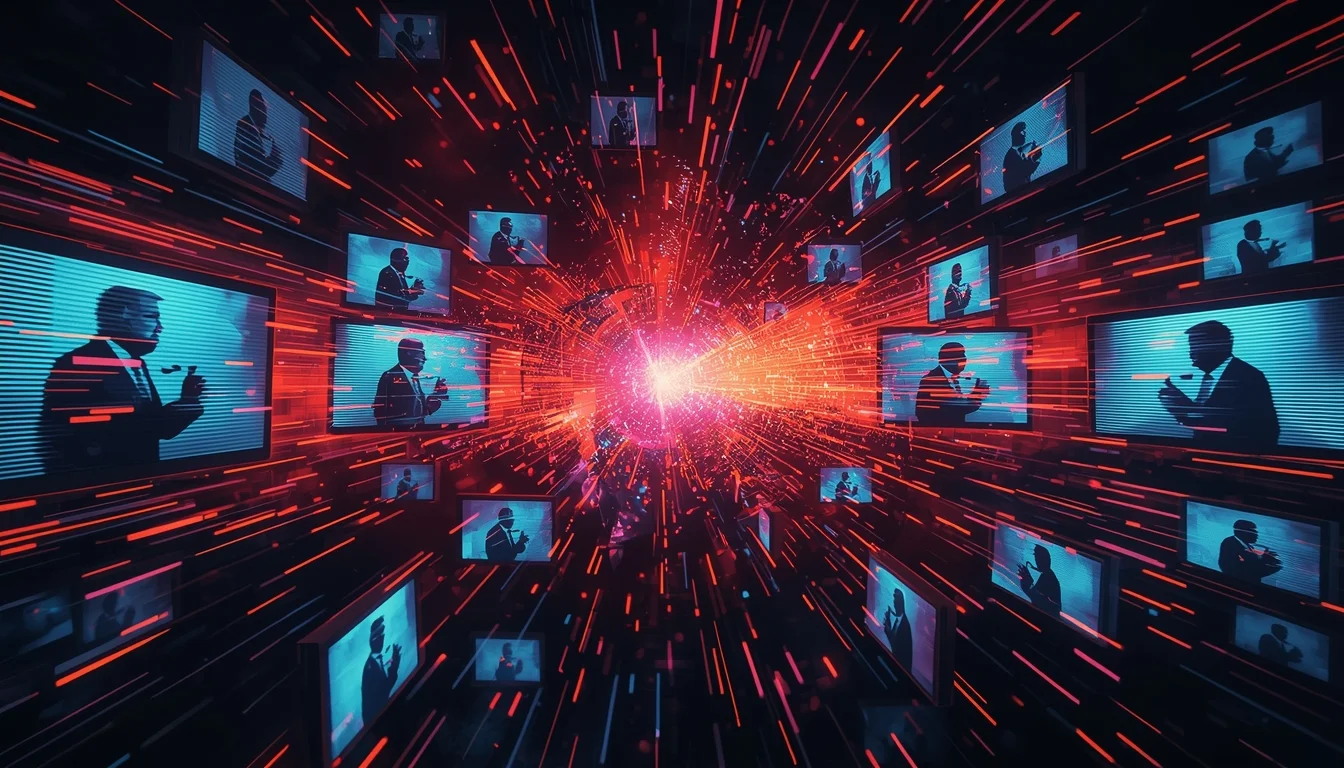
Turn on any Indian news channel at 9 PM, and you'll witness something remarkable: eight people in boxes on screen, all shouting simultaneously, while an anchor demands answers to questions they never let anyone finish answering.
This is what passes for "debate" on Indian television in 2026.
But here's the uncomfortable truth: these aren't debates at all. They're entertainment products designed to generate outrage, boost TRPs, and keep you watching through the commercial breaks.
Let's break down why Indian TV debate culture is broken—and what it means for our democracy.
The Anatomy of a Prime-Time "Debate"
The Standard Format
If you've watched any Indian news channel between 9-11 PM, you've seen this format:
- Provocative topic framed as a binary question ("Is X anti-national?")
- 8-10 panelists in tiny video boxes
- Aggressive anchor who interrupts constantly
- 30-60 second speaking slots (if you're lucky)
- Shouting matches when anyone disagrees
- Dramatic music and graphics during "breaking" moments
- No resolution—the same topics repeat for weeks
The "Loudness" Problem
Volume has replaced substance. Here's what happens in a typical debate:
| What Should Happen | What Actually Happens |
|---|---|
| Expert explains nuanced position | Expert gets 15 seconds before interruption |
| Counter-argument presented | Opponent shouts over the explanation |
| Anchor facilitates discussion | Anchor takes sides and attacks panelists |
| Viewers learn something new | Viewers feel angry and entertained |
| Issue is explored from multiple angles | Issue is reduced to "us vs. them" |
Research on televised political communication shows that loud, aggressive formats activate emotional responses rather than rational analysis. Viewers remember who "won" the shouting match—not what was actually said.
The Business Model Behind the Chaos
Why do channels run debates this way? Simple economics:
Outrage = Engagement = TRPs = Advertising Revenue
- Calm, nuanced discussions don't go viral
- Shouting matches get clipped and shared on social media
- Controversial anchors become celebrities
- Viewers get addicted to the adrenaline
A Newslaundry analysis found that prime-time debates consistently outperform straight news programming in viewership—even when the "debates" contain almost no new information.
How TV Debates Distort Public Discourse
1. False Binary Framing
Complex issues get reduced to "Yes or No" questions:
- "Is the opposition anti-national?" (What does that even mean?)
- "Should we trust Pakistan?" (Trust for what, specifically?)
- "Is Bollywood responsible for drug culture?" (Compared to what?)
Real policy issues don't fit into binary frames. But binaries create conflict, and conflict creates viewership.
2. The Extremism Advantage
In a shouting match, moderates lose. Here's why:
- Extreme positions are easier to state in 30 seconds
- Nuanced views require context and caveats
- Louder voices get more airtime
- Reasonable panelists get talked over
Over time, channels invite increasingly extreme voices because they "perform" better on TV. This shifts the entire Overton window of acceptable discourse.
3. Expertise Doesn't Matter
Watch who gets invited to debates:
| Who Should Be There | Who Actually Gets Invited |
|---|---|
| Subject matter experts | Party spokespersons |
| Researchers with data | "Loud" personalities |
| People directly affected | Professional panelists |
| Journalists who reported the story | Celebrities with opinions |
A defense policy debate might have zero defense experts. An economic discussion might include no economists. But it will definitely include people who can shout entertaining things.
4. The "Both Sides" Fallacy
To appear balanced, channels invite opposing voices—even when one "side" is factually wrong.
- Climate change debates feature climate deniers
- Health discussions include pseudoscience promoters
- Factual matters are treated as "opinions"
This false equivalence confuses viewers about what's actually true.
The Anchor as Prosecutor
Indian news anchors have evolved from moderators to protagonists. Watch any prime-time show and notice:
Interrogation, Not Interview
- "Answer my question! Yes or no!"
- "Why are you deflecting?"
- "The nation wants to know!"
This prosecutorial style assumes guilt and demands defense. It's dramatic TV, but it's not journalism.
Taking Sides
Many anchors don't hide their positions:
- They praise guests who agree with them
- They attack and interrupt those who disagree
- They editorialize throughout the "debate"
This isn't moderation—it's participation. And it signals to viewers which "side" they should be on.
The Cult of Personality
Some anchors have become bigger than their channels:
- Personal catchphrases become memes
- Social media followings in millions
- Brand deals and celebrity status
When the anchor is the product, journalism becomes secondary to performance.
What This Does to Viewers
Emotional Exhaustion
Watching shouting matches triggers stress responses. Elevated cortisol. Racing heart. The feeling of being "informed" when you're actually just agitated.
Studies on news consumption and mental health show that high-conflict news formats correlate with increased anxiety and decreased trust in institutions.
False Sense of Being Informed
After an hour of prime-time debates, what have you actually learned?
- Probably not the facts of the issue
- Probably not expert analysis
- Probably not different perspectives fairly presented
You've learned how to feel about something—not what to think about it.
Increased Polarization
Research from multiple countries shows that conflict-oriented political TV increases partisan hostility. Viewers don't just disagree with the "other side"—they begin to see them as enemies.
In India, where communal tensions are already high, this is particularly dangerous.
Addiction to Outrage
The format is designed to be addictive:
- Cliffhangers before commercial breaks
- "Shocking revelations" that never quite deliver
- The satisfaction of seeing your "side" attack the other
Many viewers report that they hate-watch debates—unable to stop even though they know it's not informing them.
A Brief History: How Did We Get Here?
The Pre-24/7 Era
Before satellite TV, Doordarshan offered sedate panel discussions. Boring? Perhaps. But substantive.
The Cable Revolution (1990s-2000s)
Competition arrived. Channels differentiated through presentation style. News became faster, flashier, more dramatic.
The TRP Wars (2010s)
BARC ratings created intense competition. Discovery: conflict gets ratings. Debates became louder, more frequent, more controversial.
The Social Media Amplification (2020s)
Debate clips go viral on Twitter and WhatsApp. Channels optimize for "clippable moments"—the 30-second outrage that gets shared. Full context doesn't matter; the viral clip does.
What Real Debate Looks Like
For comparison, here's what informative political discussion requires:
Time to Develop Arguments
Complex issues need more than 30 seconds. Serious debate formats give speakers 5-10 minutes to present positions.
Moderation, Not Participation
Good moderators: - Ensure fair time distribution - Fact-check false claims - Ask follow-up questions - Stay neutral
Fewer Voices, More Depth
Eight panelists guarantee superficiality. Two or three experts allow actual exploration.
Good Faith Engagement
Participants should engage with the strongest version of opposing arguments—not strawmen.
Resolution or Clarity
By the end, viewers should understand the actual disagreements, not just the noise.
How to Protect Yourself
1. Skip Live Debates Entirely
Controversial take: don't watch them live. The format is designed to manipulate you emotionally, not inform you intellectually.
Instead: - Read analysis the next day - Check if any actual news emerged - Watch specific clips if something significant happened
2. Notice the Format Tricks
When you do watch, observe: - How often is the anchor interrupting? - Are experts actually being allowed to explain? - Is the question framed fairly? - What's being left out?
Meta-awareness helps you resist manipulation.
3. Seek Alternative Formats
Better options exist:
| Format | Why It's Better |
|---|---|
| Long-form podcasts | Time for nuance |
| Written analysis | Can't shout in text |
| Documentary reporting | Depth over drama |
| International coverage | Outside the TRP game |
| Multi-source comparison | See how different outlets frame stories |
4. Diversify Your Sources
If you only watch one channel's debates, you're only seeing one frame. Use The Balanced News to compare how different outlets cover the same story—without the shouting.
5. Check Your Emotional State
Ask yourself after watching: - Am I more informed or just more angry? - Did I learn any new facts? - Can I explain the other side's argument fairly?
If you're just agitated, the format worked—against your interests.
The Future of TV News
Signs of Change
Some positive developments:
- Younger viewers increasingly prefer digital formats
- Some channels experimenting with calmer formats
- Podcast interviews gaining popularity
- Streaming platforms offering documentary news
What Would Help
Structural changes that could improve things:
- BARC reform: Different metrics beyond raw viewership
- Advertiser pressure: Brands avoiding toxicity
- Viewer choices: Rewarding quality with attention
- Regulatory guidance: Broadcast standards for news
What You Can Do
Your viewing choices matter:
- Stop rewarding outrage with attention
- Share substantive journalism, not viral clips
- Support outlets doing actual reporting
- Tell friends and family about alternatives
Conclusion
Indian TV news debates aren't broken by accident. They're working exactly as designed—to capture attention, generate outrage, and sell advertising.
The problem is that this business model is incompatible with informed citizenship. When shouting replaces substance, everyone loses—except the channels counting their TRPs.
You can't fix the TV news ecosystem alone. But you can stop participating in it. Every hour spent watching manufactured conflict is an hour not spent actually understanding the issues that affect your life.
The nation doesn't need to know who can shout the loudest.
The nation needs to understand what's actually happening—and why.
Want news without the noise? Download The Balanced News app for bias-aware coverage that prioritizes information over entertainment.
Related Reading: - How to Identify Media Bias - Spotting manipulation in news coverage - Filter Bubbles and Echo Chambers - How algorithms trap you in partisan content - Political Bias in Indian Media 2025 - Where major outlets fall on the spectrum - Breaking News Addiction - Why constant news hurts your mental health